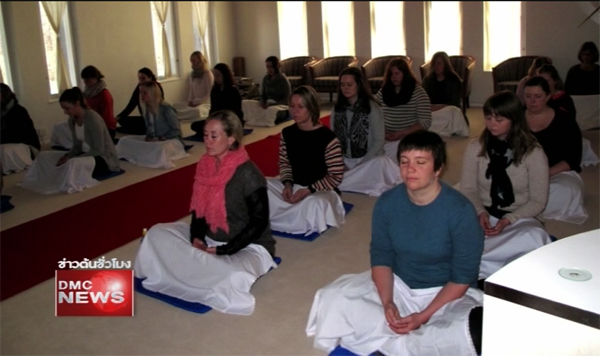
Wat Phra Dhammakaya Norway taught meditation to a group from the University of Buskerud and Vestfold
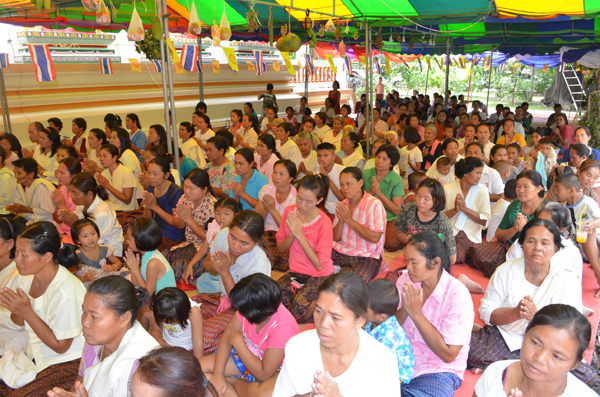
A lot of Buddhists in Buriram province have joined in the Five-Precept Keeping Village Project because they want to harmonize by using Dharma of the Buddha.
I would like to ask how we can keep the 5 precepts correctly. I would also like to have your advice regarding the wholesome strategy and method for keeping the 5 precepts solidly at all times.
In the book Thirty-eight Universal Steps to Eternal Happiness, compiled for the summer program for ordained monks by the Venerable teacher Monk Somchai Tanavuddho,
Today I have some questions about the meaning of a Buddhist word. The word “Sila” (precepts) has many facets: the 5 precepts, the 8 precepts, the 10 precepts, and the 227 precepts. I would truly like to know what the word “Sila” (precept) means. How important are the precepts? Why do we need to keep the precepts?
I heard Luang Phaw talk about Sila Vata (religious or monastic precepts). What are they? How are they different from the 5 precepts?
The Lord Buddha taught the way to create the very best in oneself by eliminating greed, anger, and ignorance through the accumulation of merit.
Someone asked me: the objective of maintaining the 8 precepts is to be celibate. If he is able to maintain the third precept, the other subordinate precepts such as the sixth, seventh, and eighth precepts, he does not need to maintain those. Is this true?
If I am determined to keep the 5 precepts fully as Luang Phaw explained about the sweetened tamarind, what will I receive as a result?
Children’s future financial security can be measured by their frugality and parents can cultivate good economic sense in their children by being frugal themselves